

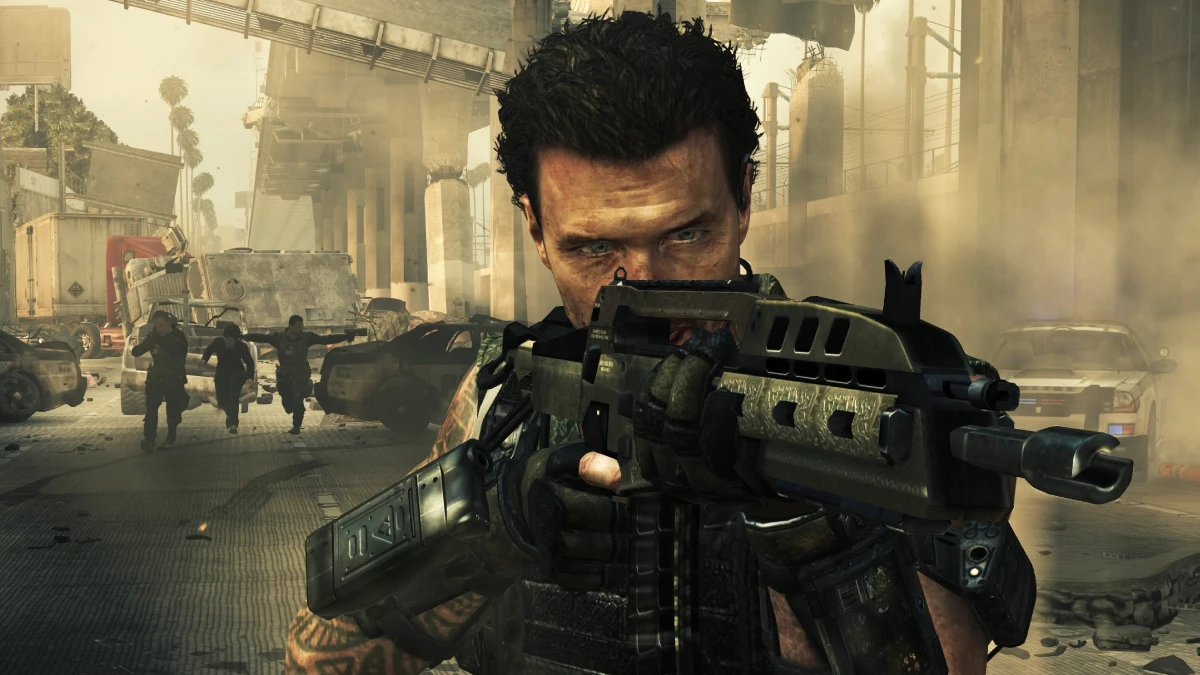

The surprise return of Call of Duty: Black Ops and Call of Duty: Black Ops 2 on PlayStation has become one of the biggest success stories of the year.
Released without months of marketing or major technical overhauls, the two classics immediately climbed sales charts, proving that players are still willing to pay for some of the franchise’s most beloved entries. According to estimates from Alinea Analytics, the two games sold a combined 11.2 million copies during July, generating around $435 million in revenue in a single month. While Activision hasn’t confirmed those figures, the publisher has acknowledged that demand far exceeded its own expectations.
For most fans, those numbers simply reinforce what they’ve known for years: the original Black Ops games remain among the strongest releases in Call of Duty history.
For Gavin Goslin, however, the success tells a different story.
The former Treyarch level designer, who worked on both games, says watching the re-releases dominate the charts has been “bittersweet.” While he’s proud to see projects he helped create continue to resonate with players more than a decade later, he argues that the developers responsible for those games haven’t shared in any of the renewed financial success.
Key Facts
| Original games | Call of Duty: Black Ops (2010) & Black Ops 2 (2012) |
| PlayStation re-release | July 2026 |
| Estimated sales | 11.2 million copies |
| Estimated revenue | Around $435 million |
| Main issue | Former developers say they received no share of the new revenue |
Rather than criticising the ports themselves, Goslin’s argument focuses on who benefits when classic games continue generating substantial income years after launch.
In a LinkedIn post that quickly spread across gaming media, he described the re-releases as little more than straightforward digital versions of the original games. From his perspective, that makes the commercial success even harder to ignore because it is largely built on work completed more than a decade ago.

Seeing our blood, sweat and tears still dominating the charts in 2026 is amazing, but it’s hard to watch the suits rake in giant financial windfalls from our old code while the actual creators don’t see a dime.
— Gavin Goslin
The comments immediately resonated with developers across the industry, not because they exposed an unknown problem, but because they highlighted one that has existed for decades.
More Than a Nostalgia Hit
Activision itself admits the scale of the success came as a surprise.
Speaking to The Game Business, Chief Marketing Officer Tyler Bahl said the publisher expected longtime fans to return to Black Ops, but underestimated just how many players wanted to revisit the series on modern PlayStation hardware. According to Bahl, the response confirmed that many players still crave the straightforward multiplayer experiences that helped define earlier Call of Duty releases.
That demand is easy to understand.
Black Ops and Black Ops 2 are widely regarded as two of Treyarch’s finest entries, remembered for campaigns that balanced blockbuster spectacle with memorable characters, multiplayer maps that became community favourites and a Zombies mode that helped shape an entire subculture within Call of Duty.
Unlike many recent re-releases, these versions didn’t arrive with extensive visual upgrades or major gameplay changes. Players largely returned because they wanted to experience the original games again.
Ironically, that is also the foundation of Goslin’s argument.
If the original experience is what continues attracting millions of players in 2026, should the people who spent years creating it receive some form of long-term recognition beyond the salary they earned during development?
It’s a question with no simple answer, but one that extends far beyond Activision.
Most AAA studios operate under traditional employment contracts. Developers are paid while a game is being produced, and once it ships, future revenue belongs to the company that owns the intellectual property.
That system has been the industry standard for decades.
As publishers increasingly rely on remasters, ports and legacy collections to strengthen their release schedules, however, more developers have begun asking whether that model still reflects how games generate value today.
For Goslin, the issue isn’t that publishers continue selling classic games.
It’s that those games can produce hundreds of millions of dollars years later while many of the people who built them have already moved on, changed careers or, in some cases, been affected by the waves of layoffs that have hit the industry over the past few years.
A Debate the Industry Can No Longer Ignore
Goslin’s comments have resonated because they touch on an uncomfortable reality that extends far beyond Activision.
Most game developers are hired as employees, not royalty holders. They receive a salary during production and, depending on their contract, may earn performance bonuses tied to a game’s launch. Once development ends, however, the intellectual property belongs to the publisher, meaning future sales, subscription deals, ports and re-releases rarely generate additional income for the people who originally built the game.
That system has been part of the games industry for decades. Yet as publishers continue investing in remasters, remakes and digital re-releases, more developers are questioning whether it still reflects the long-term value their work creates.
In Goslin’s view, the answer is no.
After his original LinkedIn post gained traction across gaming media, the former Treyarch developer doubled down on his argument. He said he was encouraged to see the discussion spreading, adding that developers who endured years of crunch to create successful games deserve “legacy rewards and protections” when those same titles continue generating substantial revenue years later.
His proposal isn’t necessarily about monthly royalty cheques.
Instead, it raises the possibility of new compensation models that could include retroactive bonuses, profit-sharing or other forms of recognition when older games continue performing well long after their original release.
None of those ideas have been announced by Activision, Microsoft or any other major publisher. For now, they remain part of a broader industry conversation rather than a policy under consideration.
Why This Story Matters Beyond Black Ops
The timing makes the discussion particularly significant.
Publishers have increasingly turned to legacy releases over the past few years. Whether through remasters, enhanced editions or straightforward digital ports, classic games have become an important part of release calendars because they carry far less risk than building entirely new projects from scratch.
For players, that trend has largely been positive. Older favourites become accessible on modern hardware, multiplayer communities receive a second life and newer audiences get the chance to experience games they may have missed.
For publishers, the business case is equally clear.
Development costs are often significantly lower than those of a brand-new AAA title, while established franchises already have a loyal audience willing to return.
The success of the Black Ops re-releases illustrates that perfectly.
According to Circana, Black Ops 2 became the best-selling game in the United States during July, while estimates from Alinea Analytics suggest the two PlayStation releases generated around $435 million in a single month. Although those revenue estimates haven’t been confirmed by Activision, the publisher has publicly acknowledged that demand exceeded internal expectations.
What Goslin questions is not whether publishers should continue bringing back classic games.
His argument is much narrower.
If companies continue earning significant revenue from projects completed more than a decade ago, should the developers who created those experiences receive something beyond the salaries they earned at the time?
It’s a question with no easy answer.
Introducing industry-wide royalty programmes would require publishers to rethink contracts, ownership structures and compensation models that have existed for years. It would also raise practical questions about who qualifies for payments on projects involving hundreds of developers across multiple studios.
Those complexities help explain why no major publisher currently operates a broad royalty system for legacy releases.
The Conversation Isn’t Going Away
Activision has celebrated the commercial performance of the Black Ops re-releases, describing them as stronger than expected and pointing to players’ enthusiasm for revisiting classic Call of Duty experiences with friends. At the same time, neither Activision nor Microsoft has publicly responded to Goslin’s call for legacy compensation.
Whether that changes remains to be seen.
What is clear is that the discussion has landed at a moment when the games industry is already under pressure. Studio closures, layoffs and restructuring have become increasingly common, while publishers continue relying on established franchises to drive consistent revenue.
Against that backdrop, the success of Black Ops has become more than a story about nostalgia.
It’s become a reminder that some of gaming’s biggest hits continue generating value long after the teams behind them have moved on.
For players, the re-releases represent another chance to experience two of Call of Duty’s most celebrated entries.
For developers like Gavin Goslin, they represent something else entirely: an opportunity to ask whether the people who created those classics should continue sharing in their success when those games keep finding new audiences years later.
Whatever the answer may be, it’s a conversation that reaches far beyond Call of Duty—and one that is likely to resurface every time another classic game returns to the charts.




Published: Nov 17, 2026 08:26 am